
Clean geometry, warm materials, and iconic silhouettes make Mid-Century Modern fireplace ideas a strong choice for homeowners reworking their living spaces.
These fireplaces provide visual focus while supporting a calm, uncluttered layout that suits both compact rooms and open-plan homes.
This guide outlines practical options—whether you prefer brick surrounds, sculptural mantels, or streamlined built-ins—helping you understand what fits your style and layout.
For expert insights that simplify planning and enhance the overall character of your interior.
Olive Frame Hearth Harmony
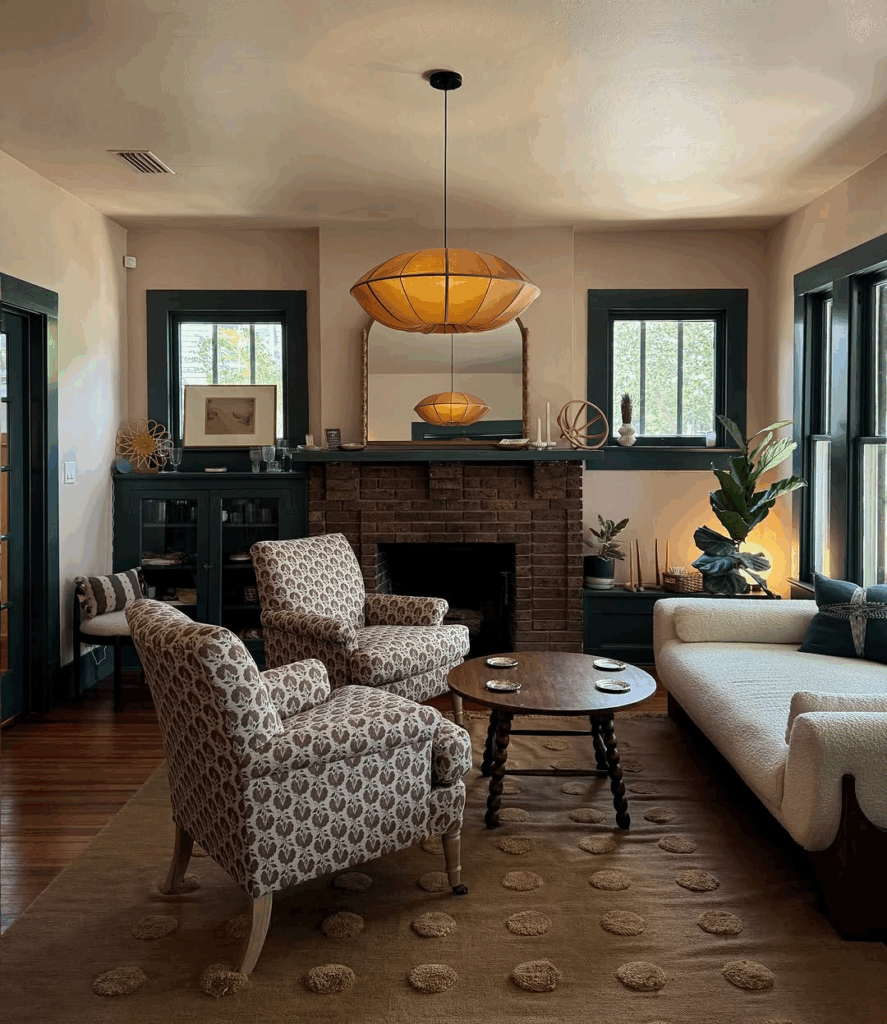
Softened green undertones around the fireplace introduce a grounded mid-century feel that pairs beautifully with textured stone and tapered wood elements.
An olive frame supports warm ember tones, helping the hearth act as both a design anchor and a subtle color bridge.
Slim metal accents and clean lines maintain the era’s timeless geometry, while curated ceramics enhance the organic palette.
This approach suits homeowners wanting warmth, character, and gentle contrast without overwhelming the surrounding seating or architectural features.
Amber Glow Suspended Hearth
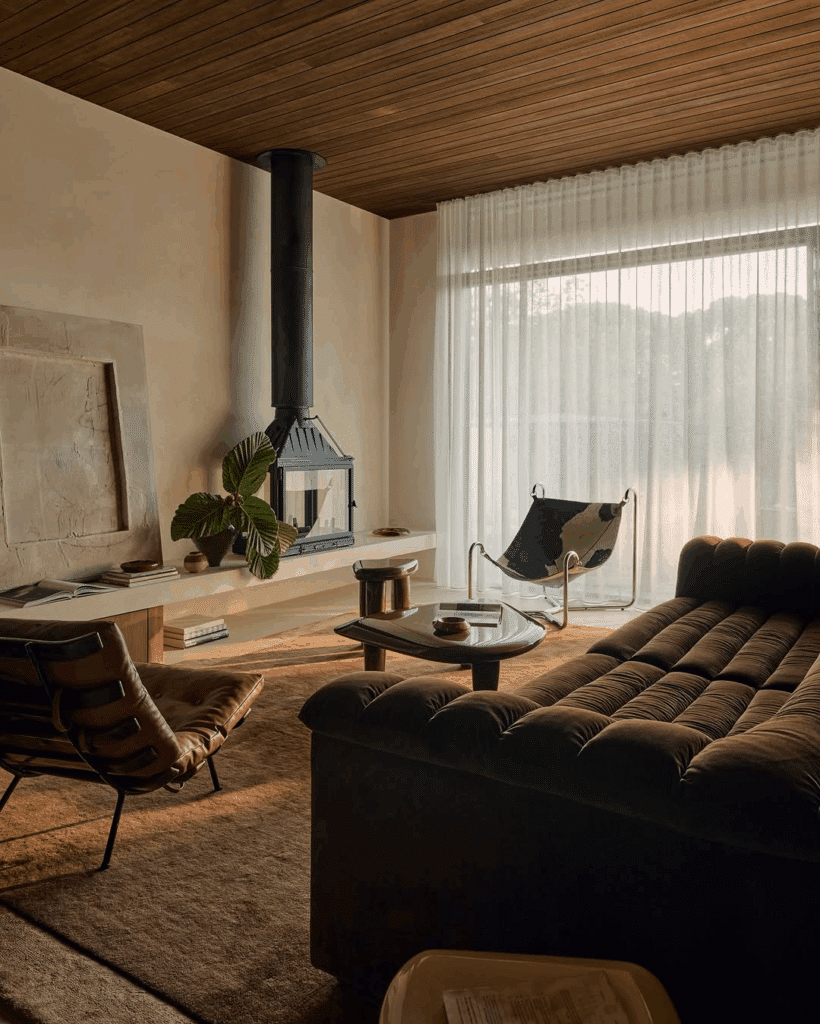
Floating fireboxes with amber-tinted finishes bring sculptural energy to mid-century interiors, making the hearth feel weightless yet visually compelling.
A suspended design highlights open layouts and draws attention to ceiling height, promoting an airy, architectural mood.
Warm metallic tones echo vintage influences, balancing nostalgia with modern efficiency.
Pairing streamlined seating and low-profile décor preserves the room’s flow while emphasizing the hearth’s luminous presence. This idea suits those seeking a compact, efficient focal point with iconic retro personality.
Walnut Grid Hearth Balance
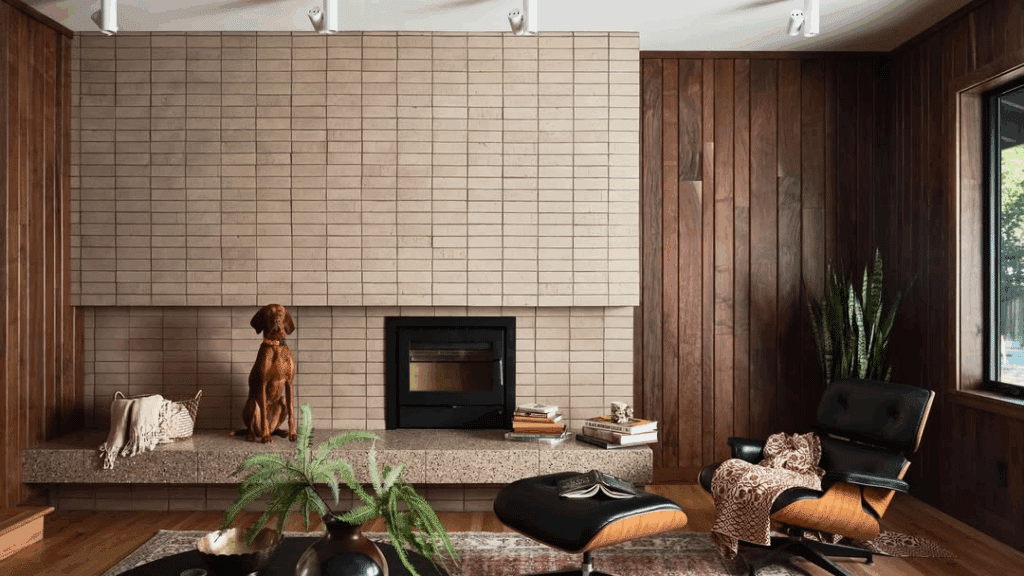
Structured wood grids surrounding the firebox introduce a calm mid-century rhythm that feels both tailored and inviting.
Walnut tones naturally complement the glow of the flames, creating a balanced interplay between warmth and geometric precision.
Recessed shelving enhances function, giving space for books, sculptural décor, or subtle greenery. The grid pattern anchors the fireplace wall, reinforcing symmetry and craftsmanship.
This design works particularly well for homes aiming to merge storage, style, and cohesive architectural character.
Golden Stone Divide Hearth
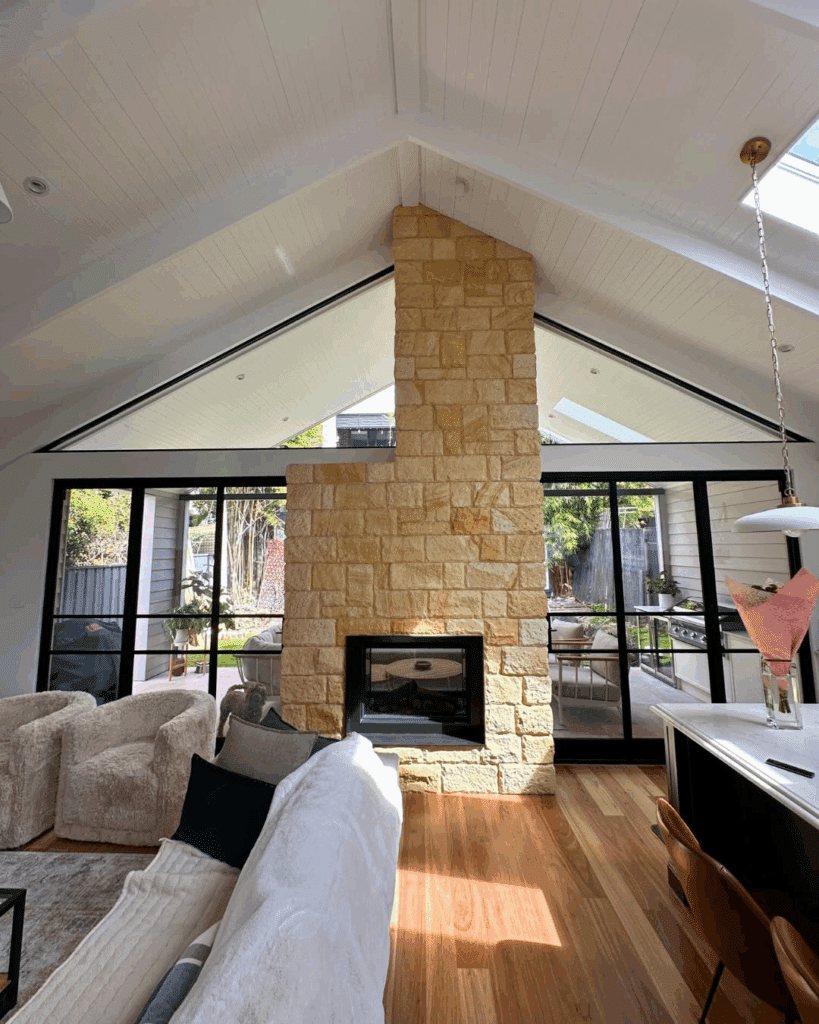
Layered stone in golden tones forms a natural divider that subtly defines zones within open-concept spaces, giving the fireplace architectural purpose beyond warmth.
Textured surfaces reflect ambient light, enhancing the mid-century palette without overpowering adjacent furnishings.
A low hearth bench offers practical seating, while matte metals keep the look grounded.
This idea supports homes seeking gentle spatial separation with authentic materials, allowing the fireplace to function as both a visual guide and a sophisticated gathering point.
Clay Brick Warmth Haven
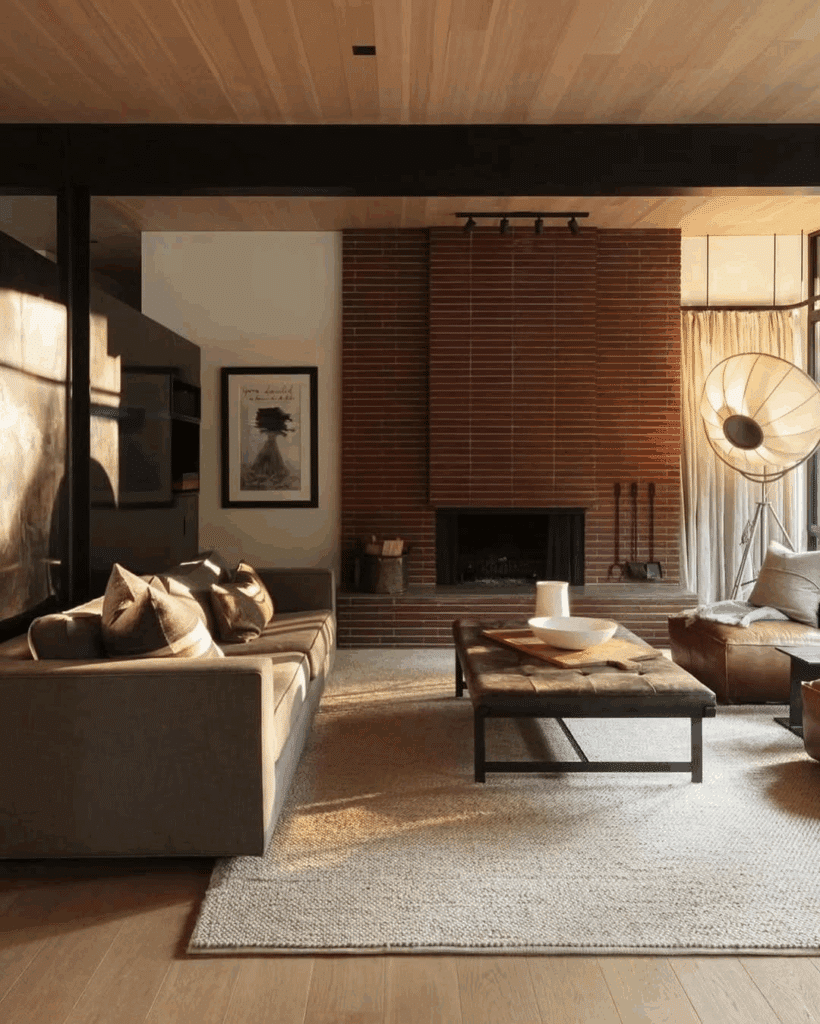
Earthy brick tones return as a nostalgic yet modern feature that anchors the hearth with tactile mid-century character.
Clay hues complement wood ceilings, leather seating, and vintage décor, creating a timeless warmth that never feels dated.
A stacked layout enhances vertical interest, while a broad mantel accommodates art or sculptural lighting.
This approach suits homeowners wanting durable materials with classic charm, ensuring the fireplace remains a cozy statement that aligns perfectly with authentic retro design principles.
Terracotta Arch Hearth Charm
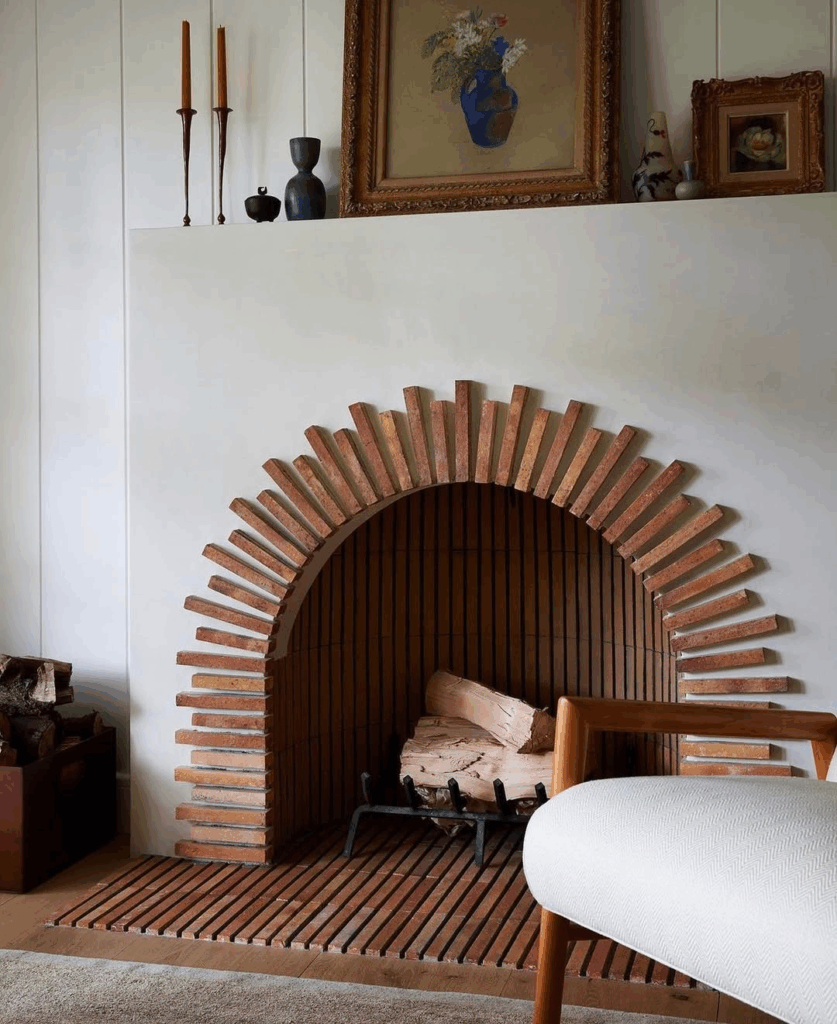
Terracotta tones shaped into a gentle arch bring authentic mid-century character, offering a sculptural frame that highlights the fire’s natural glow.
The curved form softens angular furniture while complementing wood ceilings, vintage textiles, and tapered legs.
Textured clay surfaces introduce depth without overwhelming nearby décor, keeping the focus on organic balance.
This idea works beautifully in living rooms seeking heritage charm, durable finishes, and a welcoming focal point that effortlessly blends architectural interest with functional warmth.
Rustic texture meets mid-century calm.
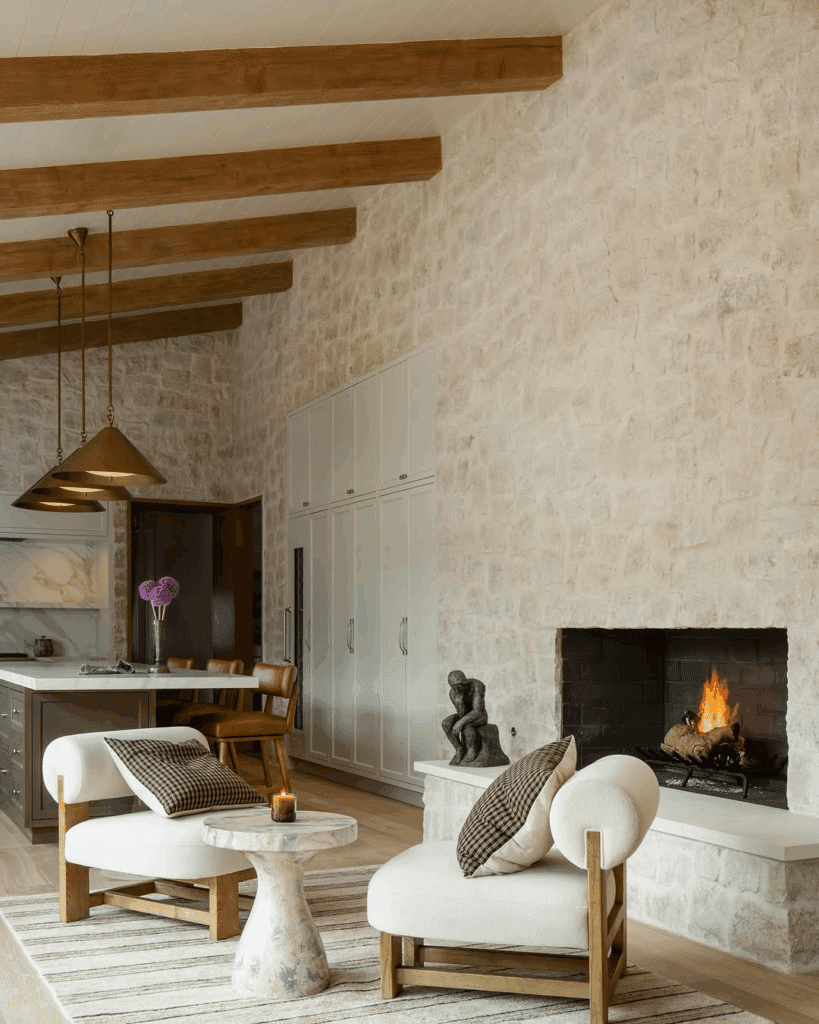
Natural surfaces such as hand-finished stone or textured plaster pair seamlessly with classic mid-century silhouettes, creating a grounded and visually calming hearth feature.
The mix of rough materials and clean lines provides a balanced backdrop for teak furniture, woven accents, and neutral upholstery.
Gentle earth tones help the fireplace feel integrated rather than dominant, supporting a relaxed layout.
This direction suits homes aiming for understated character, tactile appeal, and a comfortable gathering zone rooted in timeless design principles.
Retro Brick Hearth Revival
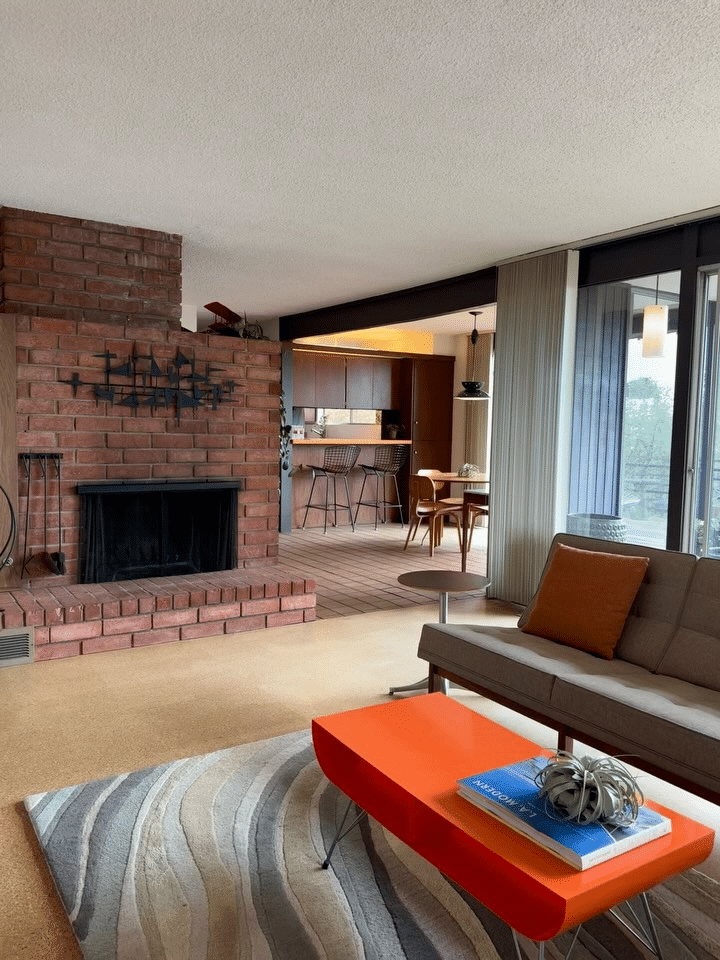
Time-honored brickwork returns with renewed appeal, offering durability and mid-century authenticity for fireplace walls.
A stacked or running bond pattern reinforces clean geometry, while natural clay tones pair well with leather seating and walnut cabinetry.
Slightly varied textures prevent the surface from feeling flat, encouraging visual interest without excess ornamentation.
This approach suits homeowners wanting a dependable material that echoes vintage architecture while providing a strong, warm focal point suited to both classic and updated retro interiors.
Retro Cone Hearth Glow
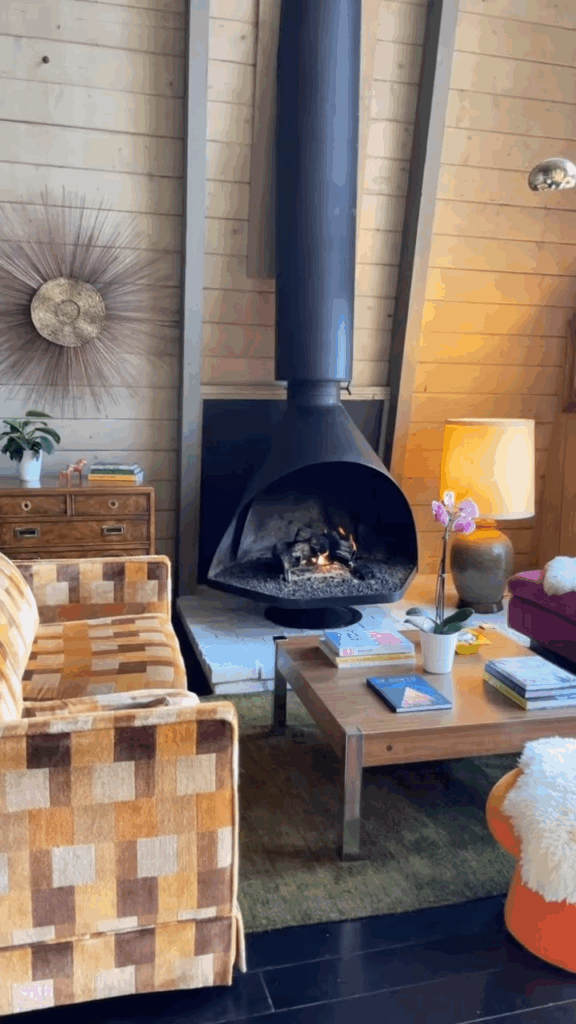
Freestanding cone fireplaces introduce sculptural drama with their iconic tapered forms and radiant metal finishes.
Their elevated firebox distribution provides warmth efficiently across seating zones, supporting open-plan layouts typical of mid-century homes.
Matte or enameled colors add personality without overwhelming other features, making the hearth both functional and expressive.
Pairing the cone with low furniture and wide windows maintains a breezy, relaxed atmosphere. This choice brings unmistakable retro character while offering practical heating and strong visual identity.
Palm Springs Curved Hearth Elegance
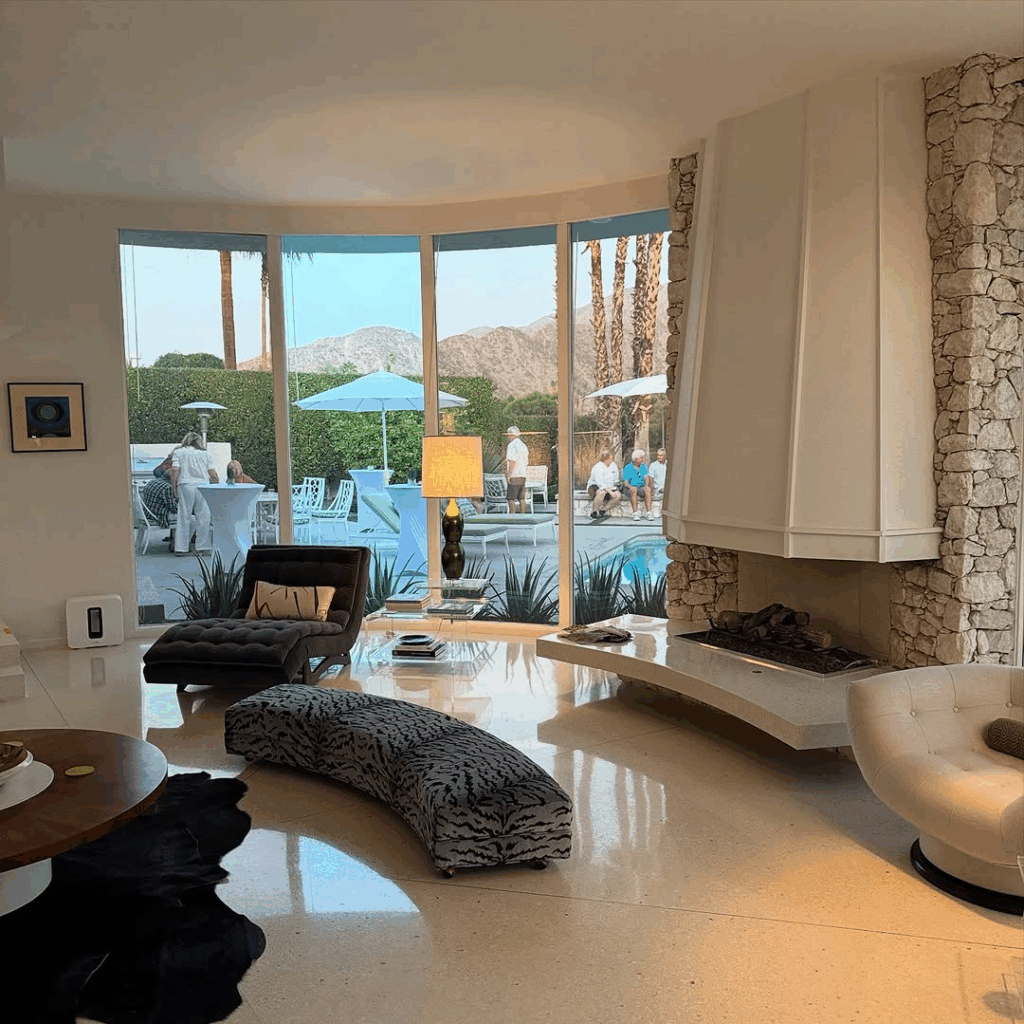
Sweeping curves inspired by Palm Springs architecture give the fireplace a resort-like appeal, emphasizing smooth transitions and airy mid-century flow.
Light stone, plaster, or concrete finishes complement sunlit interiors, allowing the hearth to function as a sculptural statement rather than a heavy mass.
The gentle arc pairs well with terrazzo floors, vintage seating, and minimalist art.
This idea suits homeowners seeking an open, inviting layout where form, function, and relaxed desert modernism come together in a refined focal point.
Textured White Brick Hearth Divide
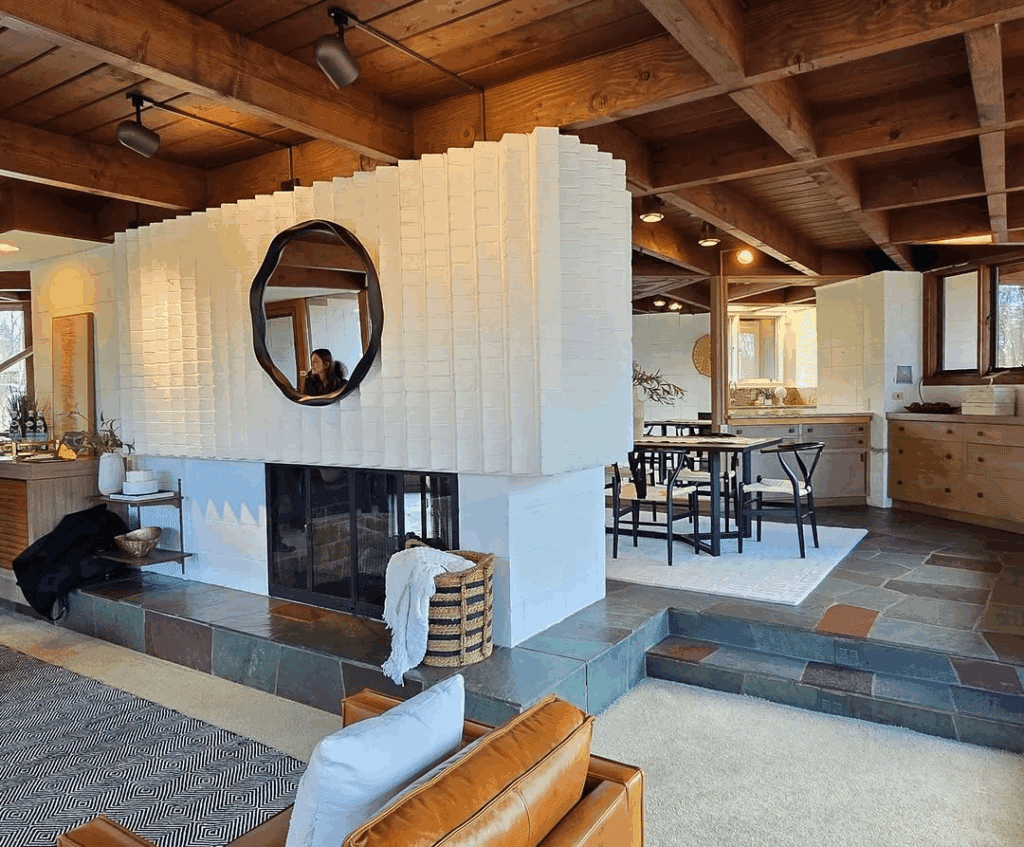
Subtle tonal variations across white brick help the fireplace function as a gentle room divider without overwhelming the layout.
The texture introduces visual interest while supporting clean mid-century geometry. Light mortar lines maintain rhythm, ensuring the hearth feels architectural rather than ornate.
Pairing the divide with low-profile furniture preserves openness and allows natural light to move freely.
This approach works well in homes seeking airy separation and a material palette that balances durability, brightness, and understated retro character.
Slate Vertical Hearth Statement
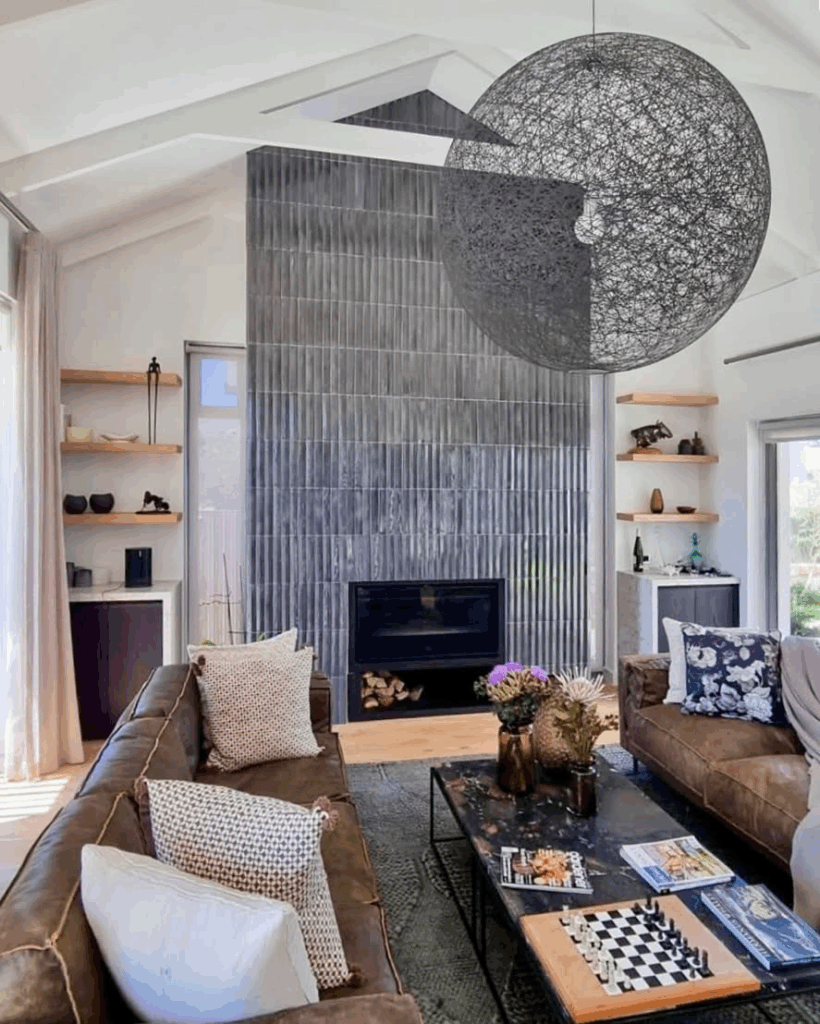
Tall slate panels arranged in a vertical format add structure and height to the fireplace wall, reinforcing the strong, linear forms associated with mid-century design.
Natural variations in the stone create depth while staying grounded in a cool, contemporary palette. The vertical emphasis draws the eye upward, helping smaller rooms feel more expansive.
This choice suits homeowners seeking a refined focal point that merges organic texture, architectural clarity, and reliable heat performance without overwhelming surrounding furnishings or color schemes.
Graphite Corner Hearth Balance
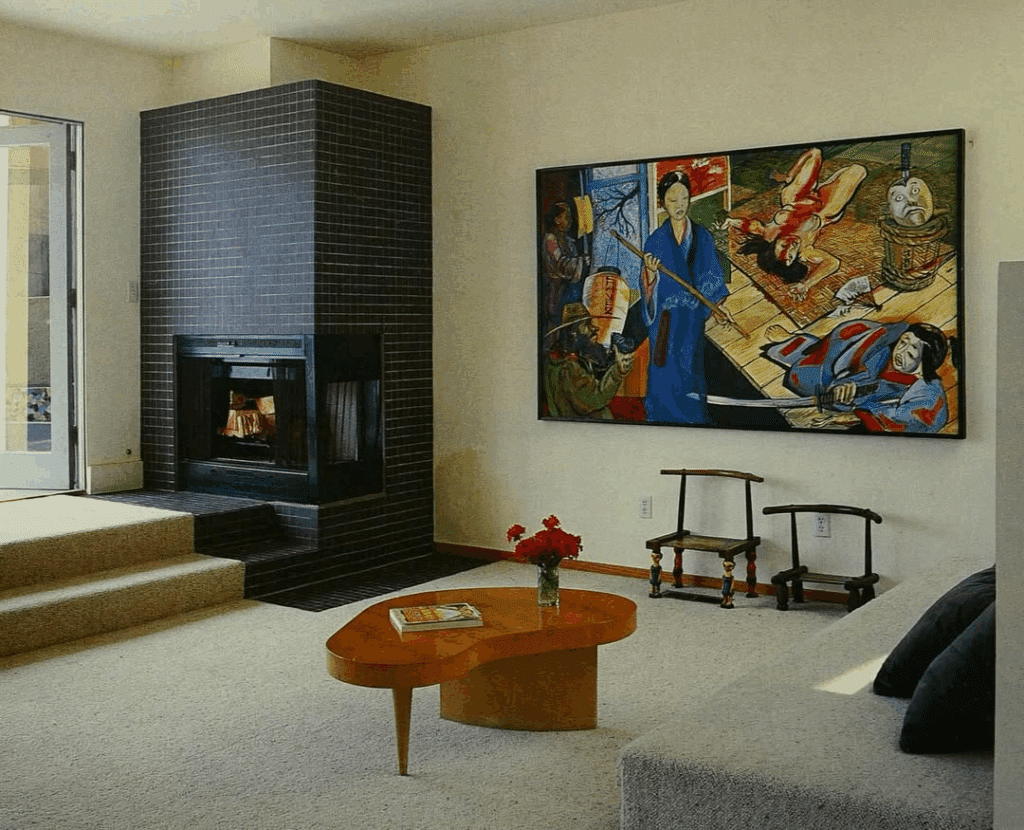
Dark graphite tones wrapped around a corner firebox help maximize unused space while adding a grounded, architectural feel.
The angled placement supports fluid traffic flow, keeping the room visually open while still offering a defined focal point.
Smooth finishes contrast naturally with warm woods and vintage textiles, reinforcing mid-century harmony.
This idea works well for compact layouts or asymmetrical rooms where balance, efficiency, and clean geometry matter, ensuring the fireplace adds presence without demanding excessive attention or floor area.
Sculpted Black Hood Hearth
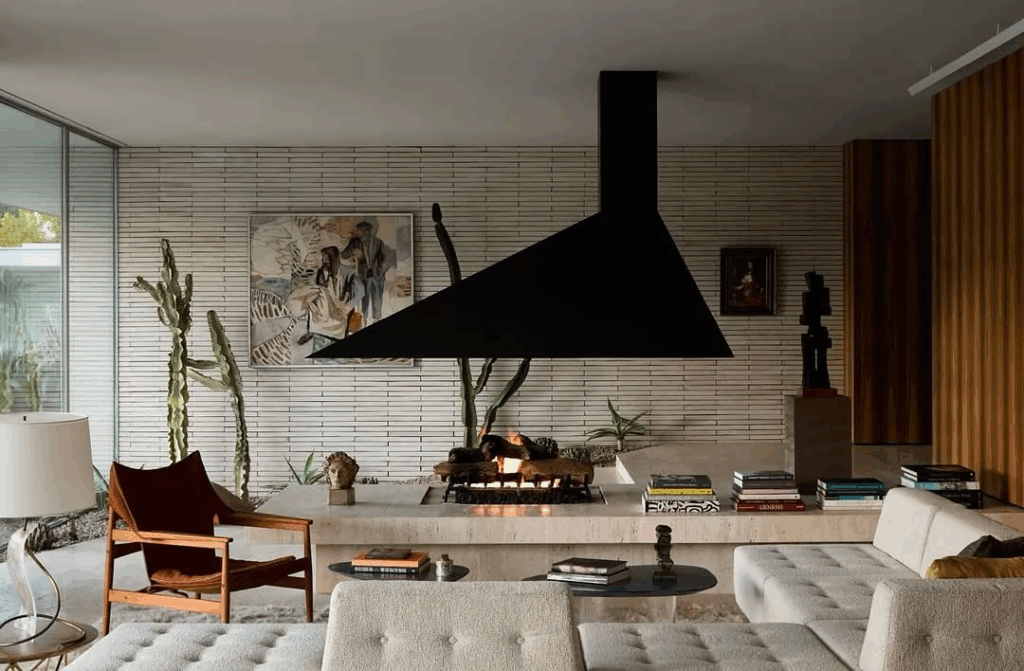
A bold, sculpted hood in matte black adds striking mid-century drama, giving the fireplace a strong architectural silhouette.
Its tapered or angular form captures the era’s emphasis on sculptural functionality, directing heat efficiently into the room.
The dark finish pairs effortlessly with stone, brick, or warm wood tones, ensuring visual contrast without clutter.
This idea suits interiors looking for a defined statement piece that merges performance, geometry, and a classic retro aesthetic rooted in iconic design history.
Cinder Block Hearth Simplicity
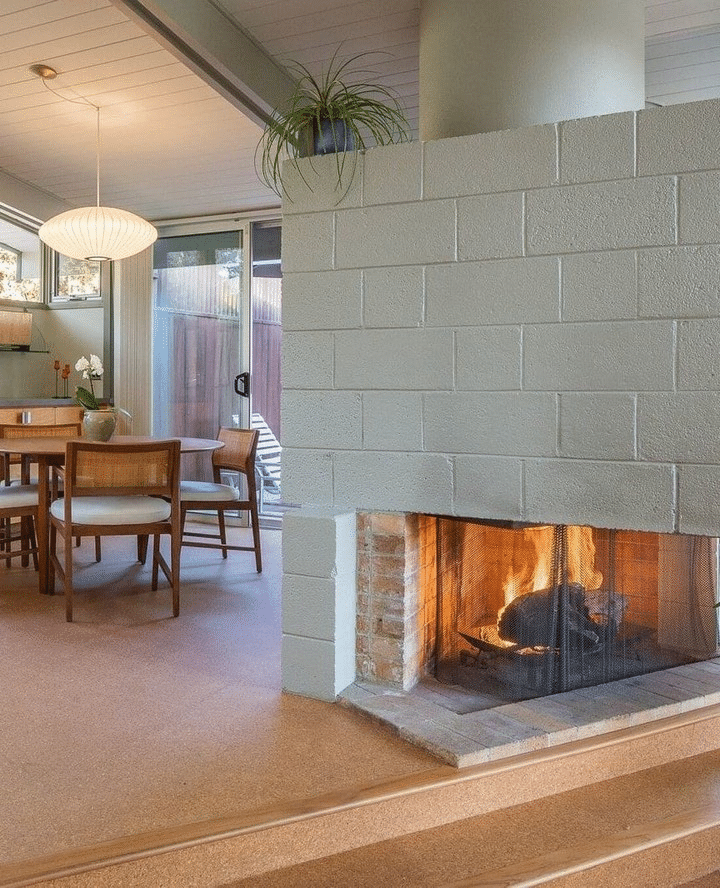
Raw cinder blocks arranged in clean, uniform courses deliver authentic mid-century utility with a practical, affordable edge.
Their subtle texture and soft gray tones give the fireplace a grounded, architectural presence without overwhelming nearby décor.
When paired with smooth concrete floors or natural wood accents, the hearth feels honest and streamlined.
This direction appeals to homeowners seeking durability, minimal ornamentation, and a straightforward material palette that supports functional living while preserving the era’s emphasis on clarity and structural rhythm.
Crimson Cone Hearth Accent
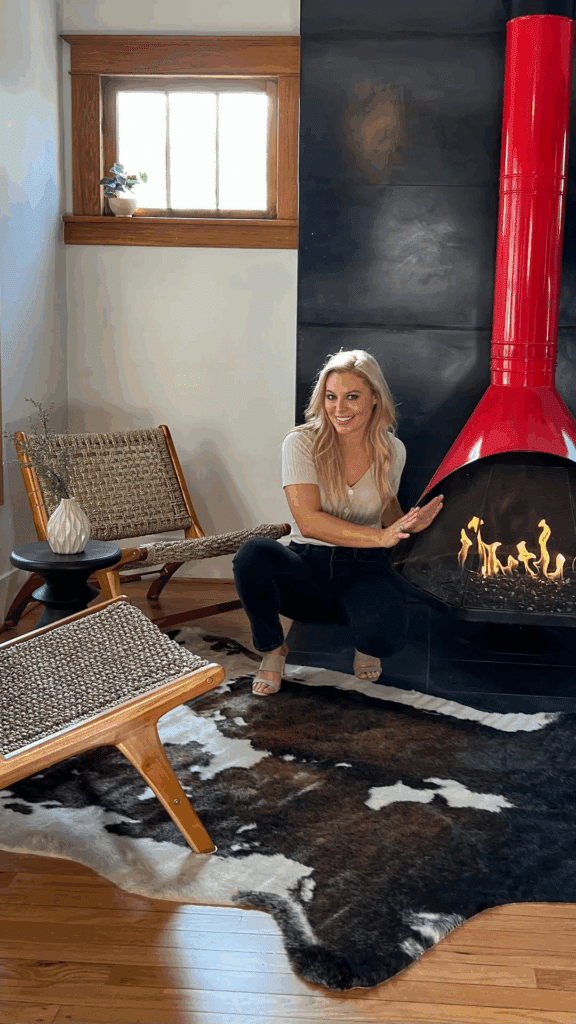
Vibrant red enamel on a tapered cone fireplace introduces a lively retro edge that instantly anchors the room.
Its elevated firebox distributes warmth efficiently, supporting open layouts common in mid-century homes.
The sculptural silhouette pairs well with low seating, teak sideboards, and graphic textiles, ensuring the hearth remains both functional and visually striking.
This direction works well for homeowners seeking a confident color statement that still honors the classic geometry and balanced proportions found throughout mid-century architecture.
Cedar Grid Hearth Retreat
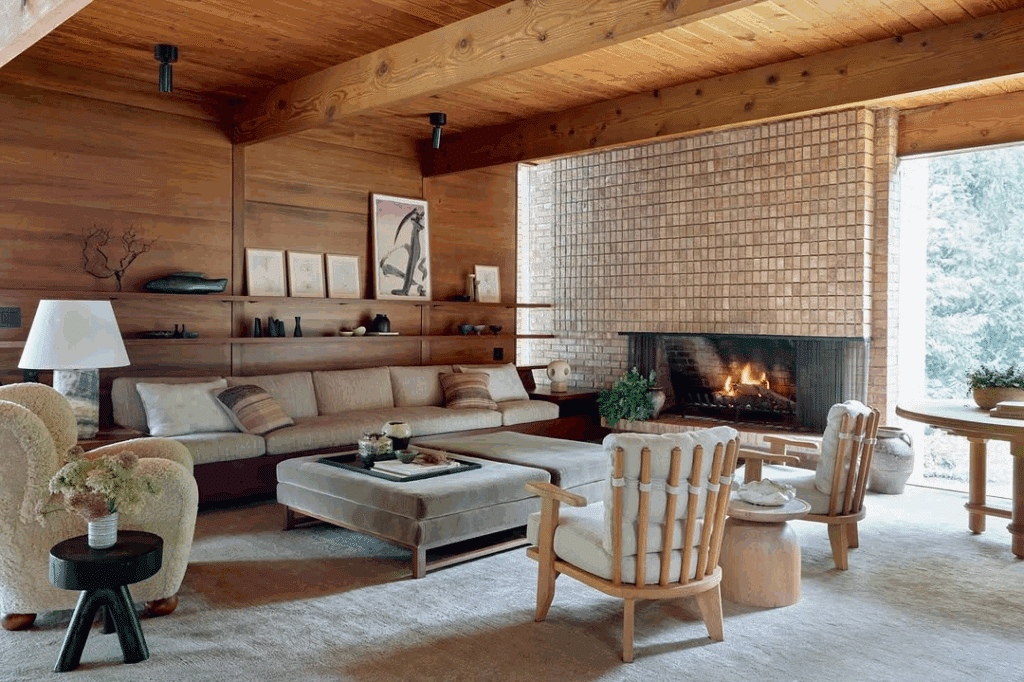
Warm cedar arranged in a structured grid brings tactile character to the fireplace wall while supporting the clean lines associated with mid-century design.
The natural grain adds subtle movement, complementing stone hearths, neutral upholstery, and vintage lighting.
Recessed cubbies or open shelves can sit within the grid, giving space for ceramics and sculptural accents.
This approach suits homes wanting organic warmth, balanced symmetry, and a durable material palette that enhances the fireplace’s role as a calm, grounded focal point.